
How to Make a Crochet Owl Basket: Design, Materials & Assembly Guide
Explore how a crochet owl basket is constructed, from the circular base and sturdy walls to sleepy eyes, a yellow beak and finishing details.
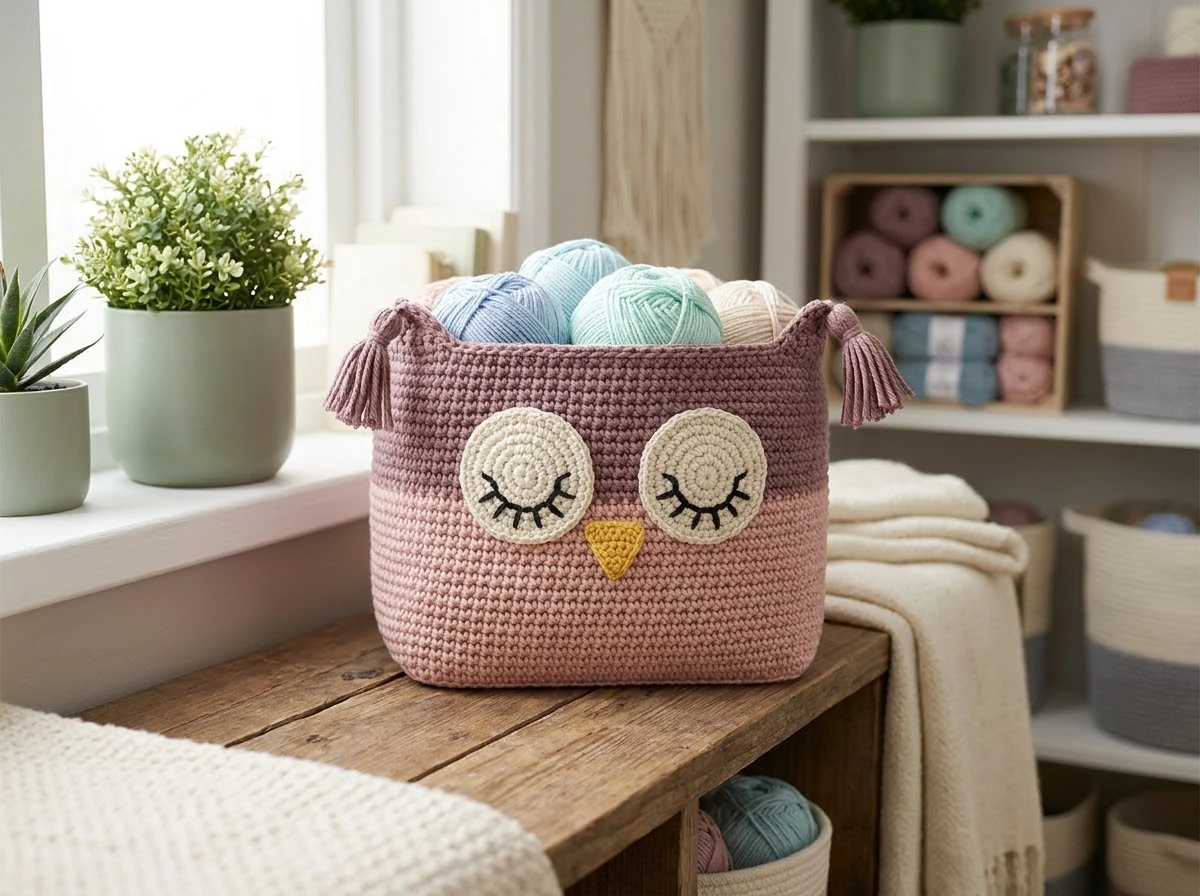
A handmade crochet basket can be both practical and decorative. Add a pair of sleepy owl eyes, a small yellow beak, and playful yarn tassels, and an everyday storage basket becomes a charming accessory for a craft room, nursery, or cozy corner of the home.
This crochet owl basket design combines a rounded base, sturdy sides, soft contrasting colors, and a few carefully placed decorative details. It is especially appealing as a yarn holder, but it can also store lightweight craft supplies and small accessories.
In this guide, we'll explore how an owl-shaped crochet basket is constructed, what materials to consider, how the decorative features work together, and which techniques are worth practicing before beginning your own version.
A note about this guide: This is a design and construction guide, not a tested, stitch-by-stitch pattern. Exact stitch counts, increases, measurements, and assembly positions must be established and validated for a specific original pattern.
What Is a Crochet Owl Basket?
A crochet owl basket is a decorative storage container shaped and embellished to resemble an owl.
Unlike a stuffed amigurumi toy, the basket has an open top and a functional interior. Its character comes from the decorative features added to the outside.
The design usually includes:
- A flat circular base.
- A cylindrical or slightly tapered basket body.
- Contrasting yarn colors.
- Two crocheted eye appliqués.
- An embroidered sleeping-eye expression.
- A small crocheted beak.
- Optional yarn tassels or ear-like decorations.
The finished basket can hold yarn, crochet accessories, or other lightweight items.
The combination of practical storage and character-inspired design makes it a lovely handmade gift.
Understanding the Basket's Construction
Before choosing yarn or picking up your hook, it helps to understand how the individual parts fit together.
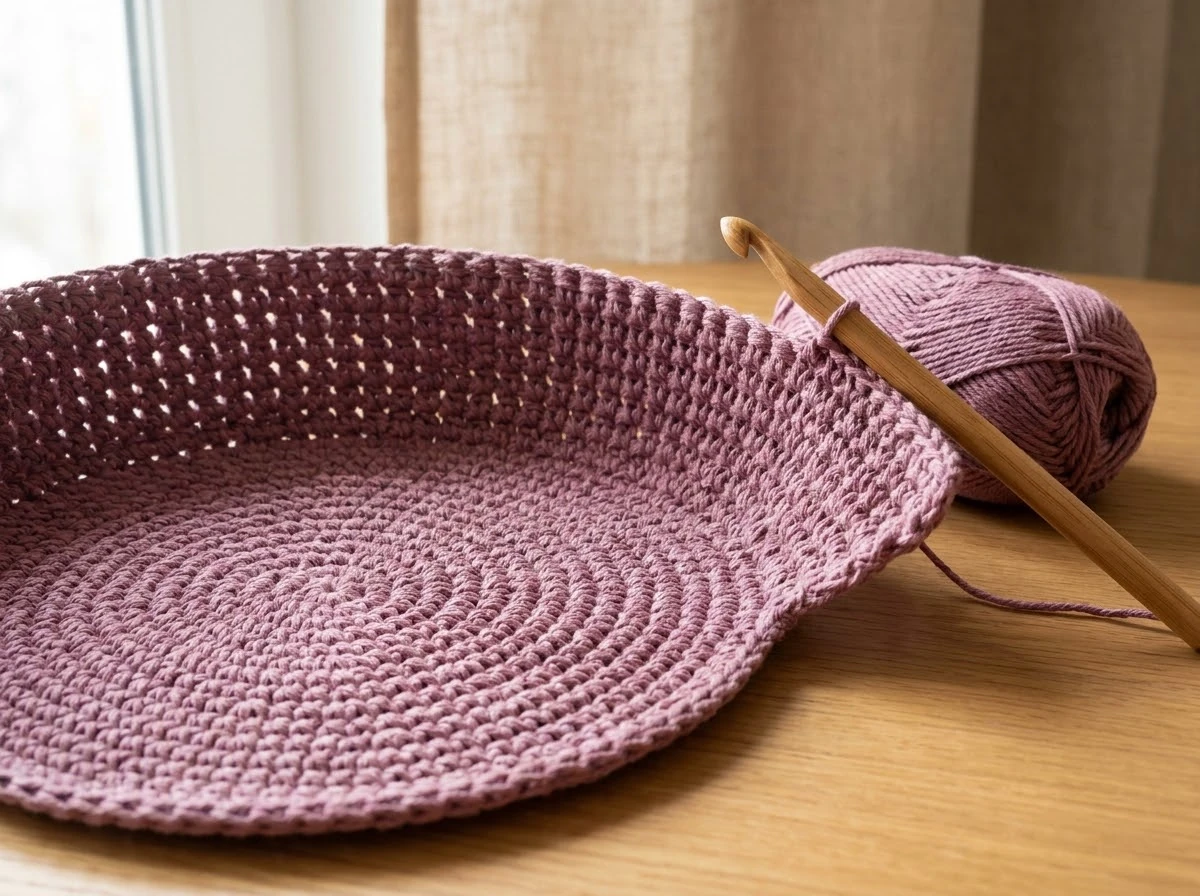
1. The circular base
The bottom of the basket provides its foundation.
A common approach is to crochet a flat circle, beginning at the center and increasing gradually in successive rounds.
The number and placement of increases depend on the stitch pattern, yarn thickness, hook size, and desired base diameter.
If the circle begins to cup upward too early, it may not contain enough increases. If it develops pronounced waves, there may be too many increases or excessive looseness.
Aim for a flat, even foundation before transitioning into the basket walls.
For beginners, reviewing basic crochet increases and decreases can help explain how shaping affects the fabric.
2. The basket walls
Once the base reaches the intended diameter, the body is worked upward.
A relatively firm stitch fabric helps the basket maintain its shape.
Single crochet is a useful technique to explore because it creates a compact texture, particularly when worked with a suitable hook and sturdy yarn.
The exact stitch placement at the transition from base to walls affects the definition of the bottom edge.
A carefully constructed transition can produce a clean, structured silhouette.
3. The contrasting color sections
The owl basket uses a soft two-tone appearance.
A darker shade forms the lower portion, while a lighter shade creates the upper section.
This contrast helps distinguish the owl's face and makes the eyes stand out.
For a similar aesthetic, consider combinations such as dusty rose and mauve, sage and cream, or oatmeal and warm brown.
Color changes should be planned at consistent points in the rounds to avoid irregular transitions.
4. The upper edge
The rim is one of the most important structural details.
A loose edge may stretch or collapse when the basket is filled.
Depending on the yarn and construction method, the rim may benefit from firm stitches, an additional finishing round, or another appropriate reinforcement technique.
Avoid assuming that every yarn will produce the same amount of structure.
Choosing Yarn and Tools
The yarn determines much of the basket's final appearance and stability.
Yarn considerations
A firm cotton yarn or suitable cotton-blend cord can be useful for structured baskets.
Consider:
- Thickness and consistency.
- Stitch definition.
- Resistance to stretching.
- Surface texture.
- Washability.
- Colorfastness.
- Whether the yarn can hold the intended basket shape.
Very soft yarn can create a beautiful texture but may need additional structural support.
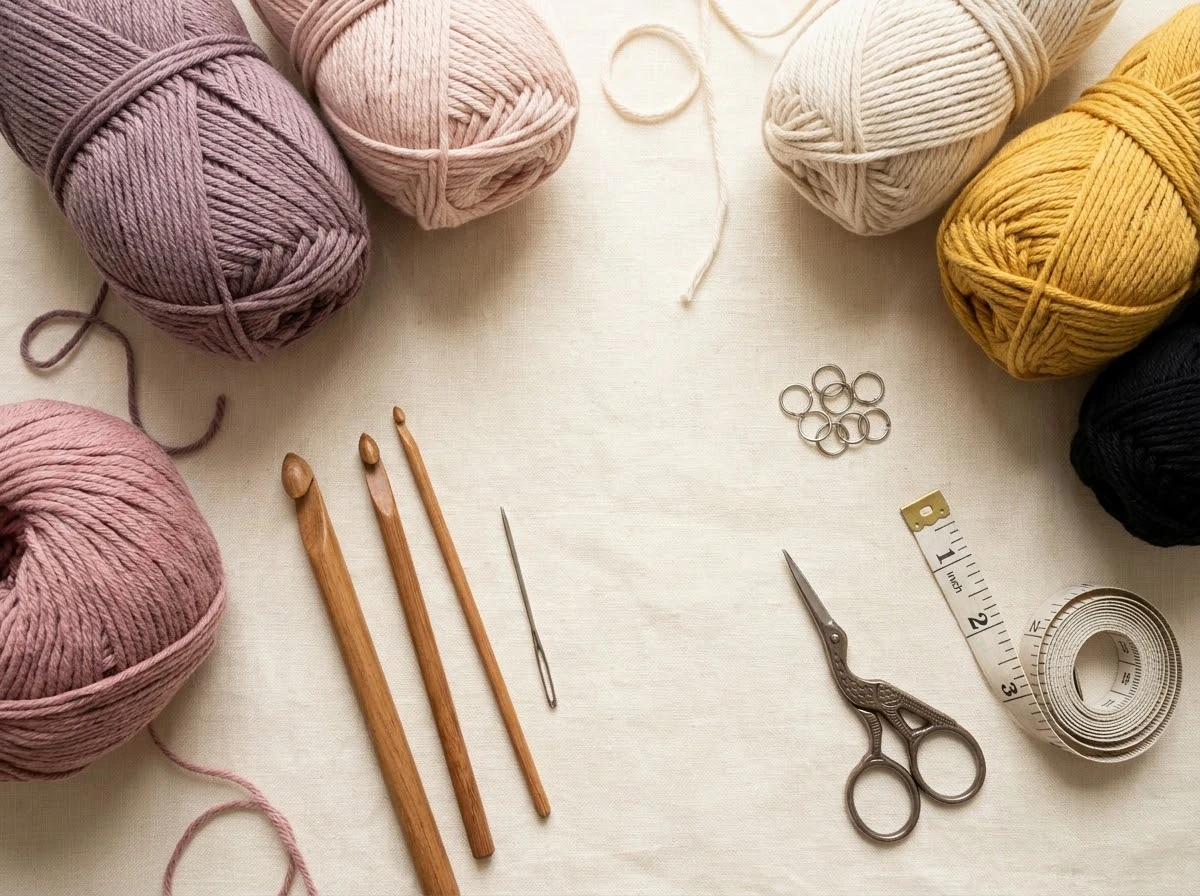
The photographed reference uses contrasting pink and purple tones, but the exact commercial yarn specifications cannot be independently confirmed from the images alone.
For more help comparing yarn thicknesses, explore our guide to yarn weights.
Choosing a crochet hook
The appropriate hook depends on the selected yarn and the firmness of the desired fabric.
A hook that produces a loose fabric may result in a basket that cannot stand upright.
A hook that is too small may make the fabric excessively stiff or uncomfortable to work.
Make a small test swatch before committing to the full project.
If you're unsure how hook sizes influence your stitches, see our guide to choosing a crochet hook.
Additional materials
Depending on your design, you may need:
- Contrasting yarn for the owl's eyes.
- Yellow yarn for the beak.
- Dark embroidery thread or yarn for the eyelashes.
- A yarn needle.
- Stitch markers.
- Scissors.
- A measuring tape.
Choose decorations that are securely attached and appropriate for the basket's intended use.
Creating the Owl's Face
The facial details transform a simple storage basket into a recognizable owl.
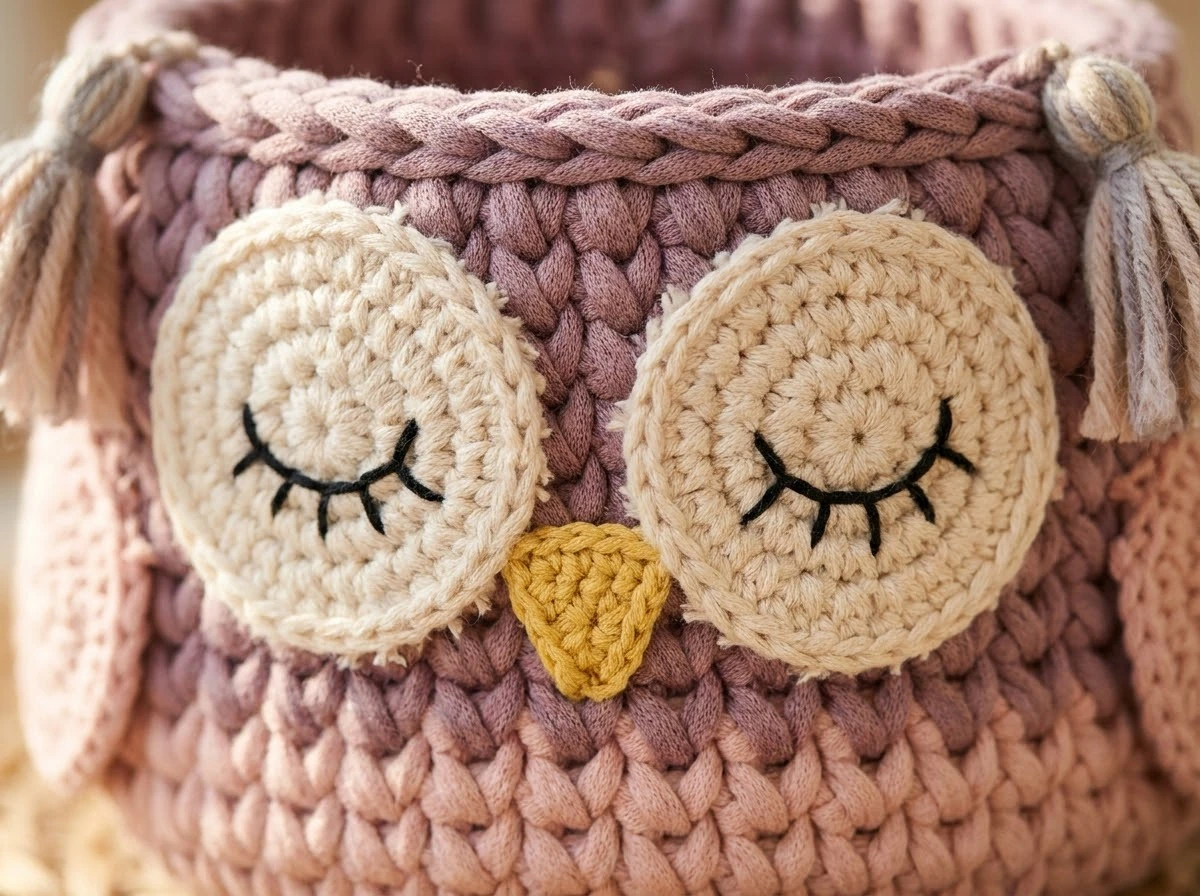
Crocheted eyes
Two circular appliqués create the foundation of the owl's face.
Their size should be proportional to the basket body.
The reference design uses pale circular eyes against a darker section of the basket.
Before attaching them, place both circles on the front of the basket and check their spacing.
Symmetry is particularly important because small positioning differences can noticeably change the owl's expression.
Embroidered sleeping eyes
Curved eyelids and short eyelashes create the peaceful, sleeping-owl expression.
You can use dark yarn or suitable embroidery thread.
Keep the curves similar on both eyes and secure the thread ends on the reverse side of each appliqué.
For a neat finish, embroider the eyelids before permanently attaching the eyes whenever that makes the reverse side easier to access.
The yellow beak
A small triangular beak adds contrast between the eyes.
It should be centered carefully and attached securely.
The beak may be crocheted as a separate small piece or constructed using another suitable textile technique.
Its exact dimensions depend on the scale of the eyes and basket.
Tassels and ear details
Short yarn tassels at the upper corners create a playful owl silhouette.
To make simple tassel decorations, cut matching lengths of yarn, group them evenly, and secure them firmly to the intended attachment points.
Trim the ends for a balanced appearance.
Decorative tassels should not be treated as load-bearing handles.
Planning the Assembly
A thoughtful assembly sequence makes the finished basket look cleaner.
First, complete the base and basket walls.
Next, make the eye appliqués and beak separately.
Before sewing anything in place, arrange the facial pieces on the basket to establish their positions.
Check that:
- The eyes are level.
- The distance between the eyes is balanced.
- The beak is centered.
- The decorative elements do not distort the basket walls.
- Tassels are attached securely.
Use temporary stitch markers to test positioning before final sewing.
Finally, weave in all loose ends and inspect the finished edges.
How to Help Your Crochet Basket Keep Its Shape
Structure depends on more than the basket's stitch count.
Yarn choice, hook size, fabric density, base construction, and finished dimensions all influence the result.
If the sides collapse easily, examine the firmness of the crochet fabric and the relationship between the basket's height and base diameter.
A taller basket may require more structural support than a shallow one.
For a decorative basket intended to hold light yarn balls, a moderately firm fabric may be sufficient.
For heavier contents, the design should be tested specifically for that load.
Do not assume that decorative crochet baskets are suitable for carrying heavy objects.
Common Mistakes to Avoid
Uneven circular base
Inconsistent increases can create a wavy or cupped foundation. Check the base regularly while working.
Loose basket walls
A very open stitch fabric may struggle to support the basket's shape. Test the chosen yarn and hook combination.
Misaligned facial features
Even small differences in eye height or spacing can change the finished expression. Position the pieces before sewing.
Poorly secured decorations
Loose appliqués and tassels can become detached with handling. Attach each element securely and inspect the reverse side.
Skipping a test swatch
Different yarns produce different results, even when labeled with similar weights. A test swatch helps you understand the fabric before beginning the full project.
Styling and Using Your Finished Owl Basket
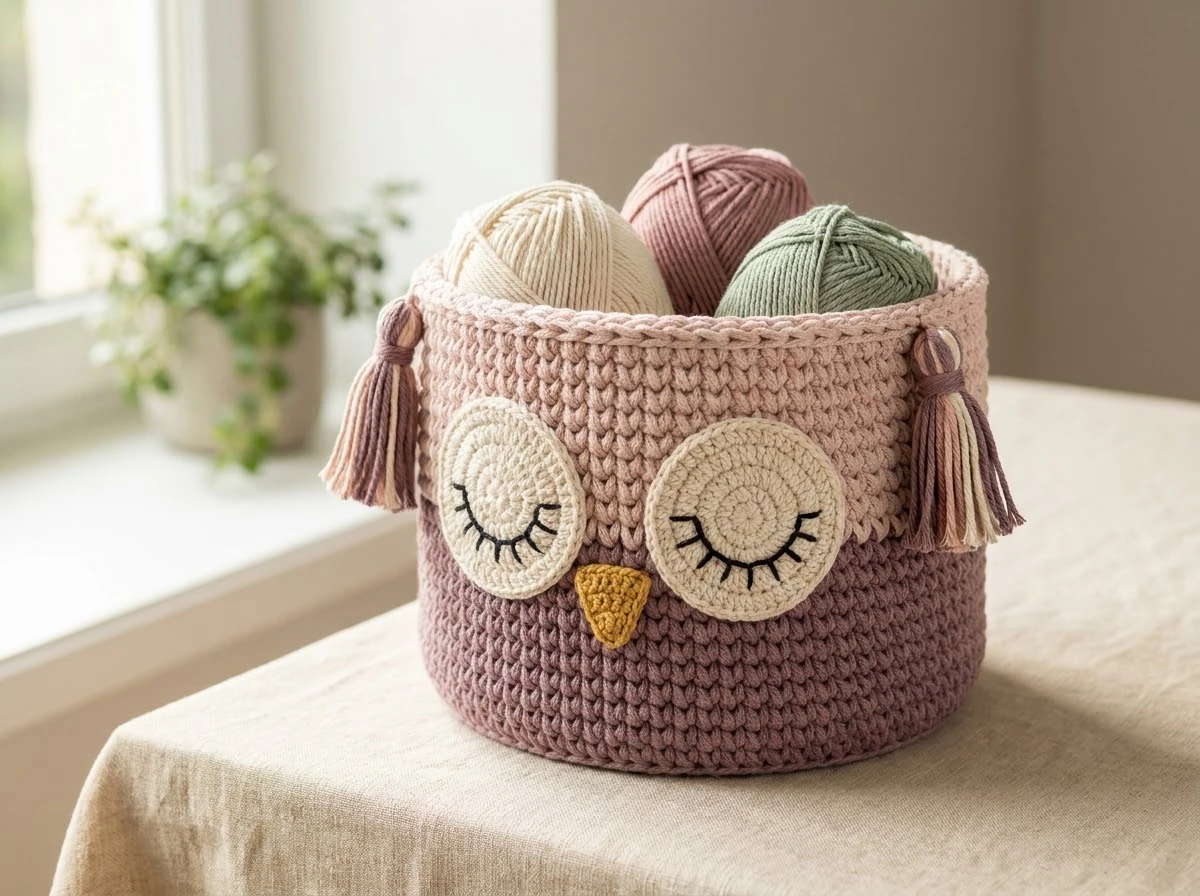
A handmade owl basket looks lovely in a craft space, especially when filled with coordinating yarn.
It can also be used to organize lightweight accessories, small fabric pieces, or decorative supplies.
For a cohesive look, choose colors that complement your room.
Soft pink and mauve create a gentle, playful appearance, while cream and sage feel more understated.
Keep the basket away from excessive moisture and follow the care requirements of your chosen yarn.
If the basket will be used around young children, avoid loose decorative components and keep potentially detachable accessories out of reach.
Frequently Asked Questions
Is a crochet owl basket suitable for beginners?
The basic basket construction may be approachable for someone familiar with working in rounds, increases, color changes, and sewing on appliqués. Complete beginners may prefer to practice those techniques first.
What stitch works well for a crochet basket?
Single crochet is a useful starting point for experimenting with a firm, compact fabric. Other stitches can work, but their suitability depends on the yarn and desired structure.
Can I use acrylic yarn?
You can experiment with acrylic yarn, but it may behave differently from firm cotton or cord. Test the fabric's ability to hold its shape before making the full basket.
Can I change the owl's colors?
Yes. The owl design works with many color combinations. Maintaining sufficient contrast between the body, eyes, and beak helps keep the facial features visible.
Is this a complete crochet pattern?
No. This article explains the design, materials, construction principles, and assembly considerations. A complete pattern would require original, tested stitch-by-stitch instructions and verified dimensions.
Final Thoughts
A crochet owl basket brings personality to an everyday storage project.
Its appeal comes from a combination of simple geometric construction, carefully chosen colors, and expressive details.
By understanding how the base, walls, eyes, beak, and tassels work together, you can plan a thoughtful handmade design and build the skills needed for a future fully tested pattern.
For more crochet inspiration, explore CrochetSmith's stitch guides, yarn advice, beginner tutorials, and home décor patterns. If you are also working from a charted pattern, our guide to reading crochet symbols and charts covers how to follow one step by step.