
3 Beautiful Crochet Cup Cozy Ideas: Lace, Color & Texture
Explore three beautiful crochet cup cozy styles, from colorful glass sleeves to delicate lace and pastel textures, with practical design and fitting tips.
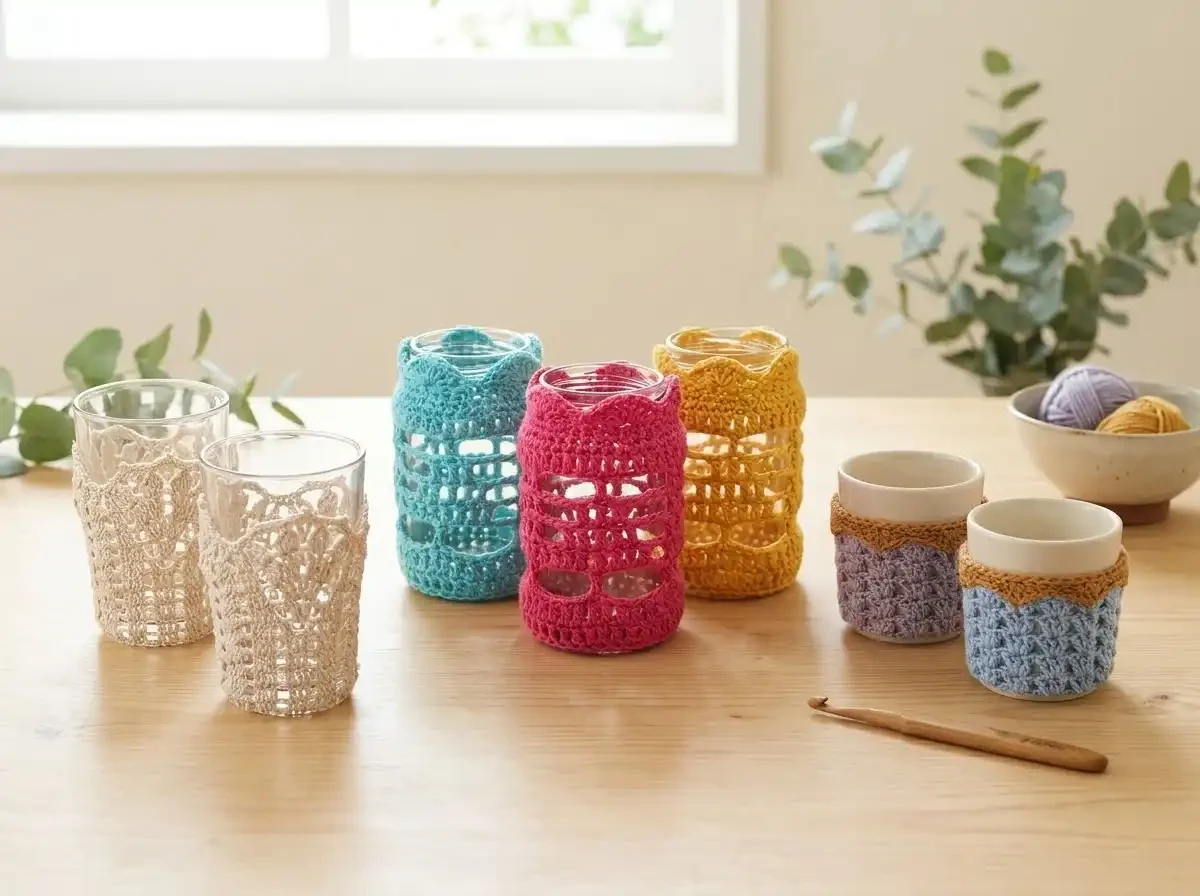
A simple cup can become a small showcase for crochet craftsmanship. A bright sleeve wrapped around a glass jar adds color to a shelf; an airy lace cover brings vintage charm to a table setting; and a softly textured cozy makes a plain ceramic cup feel personal. These three approaches share a simple idea—crochet around an everyday object—but the materials, construction, and practical considerations are surprisingly different.
This guide explores three visually distinct cup-cover styles inspired by the supplied references: colorful openwork glass sleeves, delicate neutral lace glass covers, and pastel textured ceramic cup cozies. You'll learn what makes each design work, how to choose yarn and stitches, how to plan a good fit, and what to check before using a handmade cover. The aim is to help you understand the design decisions rather than offer untested round-by-round instructions.
Important: This is an original design and technique guide, not a verified pattern for any of the pictured projects. The reference images contain third-party charts and text; their exact stitch counts, construction instructions, and measurements are not reproduced or independently validated here.
Why Crochet Cup Covers Are Such Appealing Small Projects
Cup covers are compact, relatively quick projects that let you experiment with color, stitch texture, and decorative edges without committing to a large garment. They can dress up reusable jars, display glasses, pencil holders, or appropriately shaped mugs. A well-designed sleeve can also provide a more comfortable surface to hold, but it should never be assumed to provide reliable heat protection.
The key is to start with the object, not the stitch chart. Measure its circumference at several heights, note any taper, and decide whether the crochet will be decorative or handled regularly. A sleeve that looks lovely on a straight glass may slide on a narrow-bottomed cup, and an elaborate lace pattern may snag if it is used every day.
Idea 1: Colorful Openwork Glass Sleeves
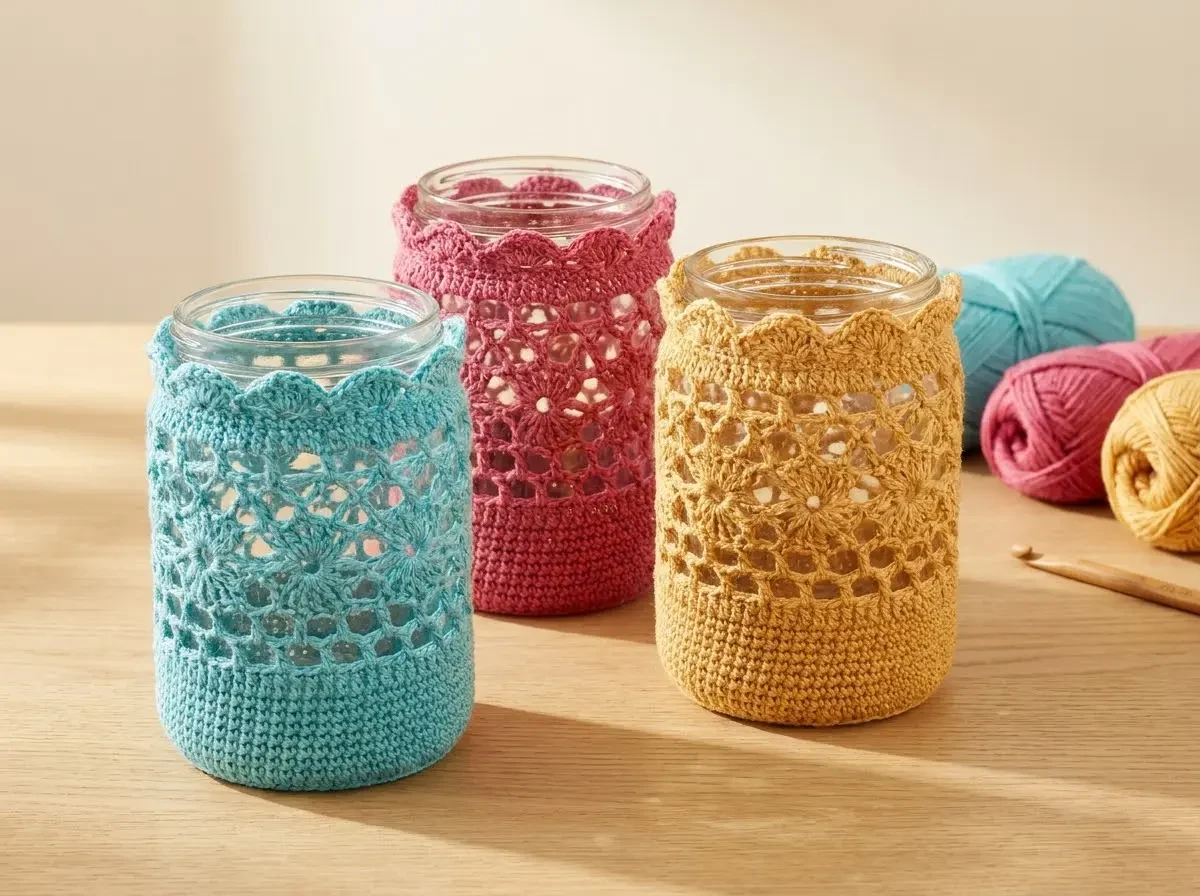
Visual character: Cheerful turquoise, vivid pink, and sunny yellow sleeves with a denser lower band, airy openings through the body, and a scalloped or softly pointed top edge.
The first reference shows three cylindrical glass containers dressed in bold crochet colors. The openwork sections allow the glass to remain visible, while the stronger bands near the bottom and rim give the covers a clear silhouette. This is an excellent inspiration for playful home décor, craft-room storage, or a coordinated group of decorative jars.
What makes this look work
The design depends on contrast: solid areas establish structure, while repeated spaces create rhythm. If the openwork is too loose, the sleeve can twist or sag; if the solid bands are too tight, it may be difficult to slide the cover over the glass. Consistent spacing matters more than using a complicated stitch.
Choose three colors with comparable yarn weight and texture so the set feels unified. Bright shades work well against clear glass, but a more muted palette can create the same effect. Keep the top decoration modest if the container is used frequently.
Construction principles to explore
A fitted sleeve may be worked as a tube or as a flat strip joined into a cylinder, depending on the intended design. Either approach requires a measured starting circumference and a swatch to check how the chosen stitch stretches. Openwork repeats must be adjusted to fit the circumference cleanly; a chart cannot simply be resized by guessing.
For a decorative jar, you can experiment with a stable lower section, an openwork middle, and a neat upper edge. Check that the sleeve sits flat without pulling the glass out of alignment. If the vessel has a lip, make sure the crochet does not obstruct it.
Best use
This style is especially suited to room-temperature decorative glass containers, such as jars holding crochet hooks, artificial flowers, or lightweight craft supplies. It is less suitable for hot drinks or slippery, condensation-covered glasses unless the fit and handling have been carefully assessed.
Idea 2: Elegant Neutral Lace Glass Covers
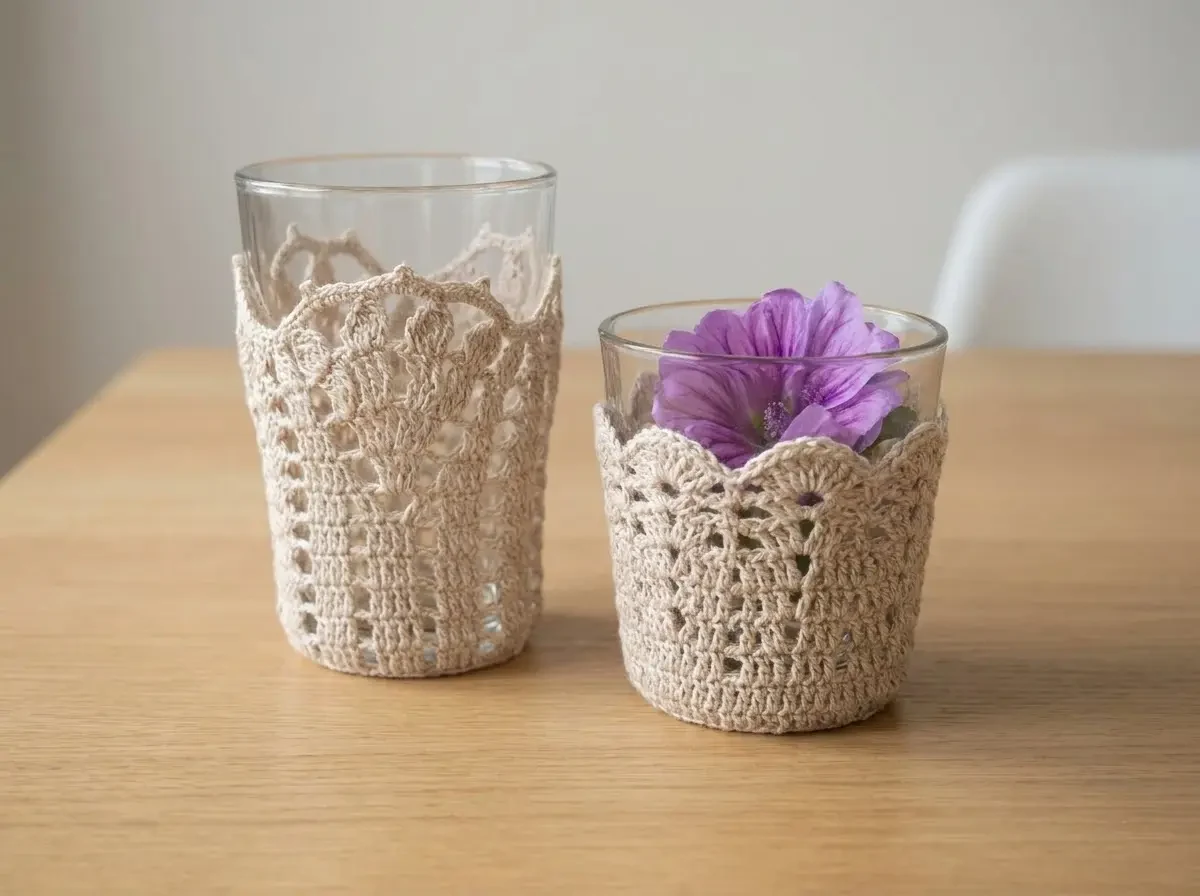
Visual character: Fine beige or natural-colored crochet, repeated lace motifs, vertical openness, and a refined, vintage-inspired finish.
The second reference features glass covers with delicate lace textures and decorative motifs. The neutral color allows the stitch pattern to become the main feature. Rather than making a bold color statement, this design relies on proportion, repeated detail, and a carefully finished edge.
What makes this look work
Lace crochet is beautiful because it balances filled stitches and empty space. Motifs appear more intentional when the repeats are evenly spaced and the finished sleeve follows the shape of the glass. A small change in gauge can noticeably affect the pattern's alignment, especially where decorative repeats meet at the seam or round transition.
A smooth cotton thread or fine cotton yarn can help reveal delicate stitch definition. The exact yarn and hook depend on the chosen original design and should be determined through swatching rather than copied from an unclear reference photograph.
Planning the motifs
Before starting, consider the height of the glass, the circumference near the base and rim, and the number of motif repeats that can fit comfortably around it. Draw a simple sketch of the intended placement. For a tall glass, repeated vertical motifs can make the cover appear elongated; for a shorter glass, a single decorative band may be more balanced.
Openwork lace often has less grip than dense crochet. A secure fit matters, and any finishing or shaping technique must suit the yarn and the intended use. Do not assume that stiffening or blocking makes a sleeve safe for hot glassware.
Best use
This is the strongest choice for decorative table styling, display glasses, and handmade gifts where the cover is handled gently. It suits understated interiors and pairs well with neutral ceramics, wood, and soft florals.
Idea 3: Soft Pastel Textured Ceramic Cup Cozies
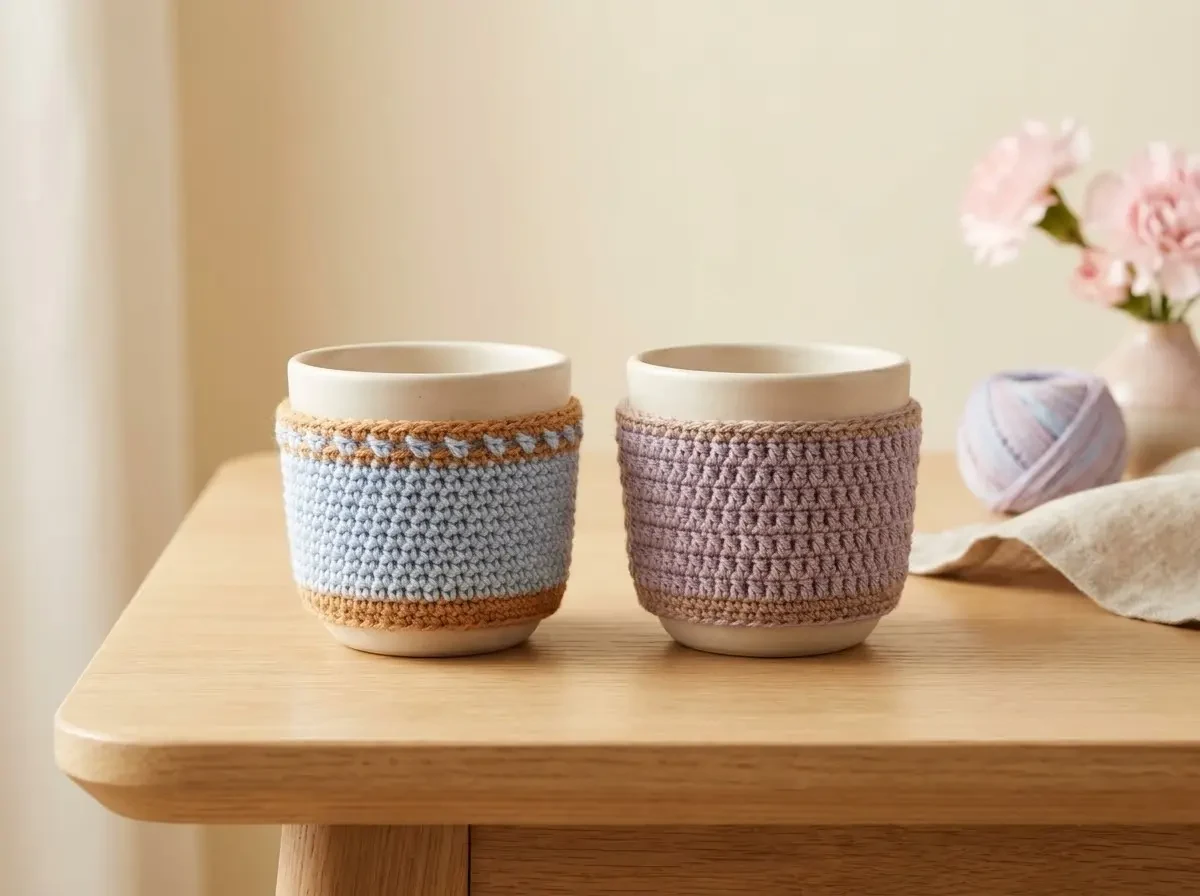
Visual character: Dusty blue, lilac, and warm brown bands combined with compact stitches and an ornamental textured section.
The third reference shows small ceramic cups wrapped in softly colored crochet holders. Compared with the glass sleeves, these covers have a cozier, more tactile appearance. The visual interest comes from the combination of color blocking, texture, and a tidy top edge.
What makes this look work
A compact stitch fabric can feel more substantial in the hand than an open lace sleeve. Small changes in stitch height or texture can create distinct bands without introducing many colors. The cup's shape is important: a tapered cup needs a different fit from a straight-sided mug, and a handle changes how the cozy can be installed and removed.
Choose yarn that feels comfortable to hold and is appropriate for the object's care routine. Cotton or a suitable cotton blend may offer clear stitch definition, but all fibers behave differently with moisture, heat, and washing. Test the chosen fabric on the actual cup.
Fit, access, and handling
A cozy should not cover the drinking rim, block a handle, or interfere with the cup sitting securely on a table. If the cup is used for a hot beverage, keep the crochet away from direct heat sources and do not rely on it as protective equipment against burns. Check the exterior temperature and handle the vessel according to its manufacturer's guidance.
For a cup without a handle, a removable sleeve may be convenient, but it must not slip when lifted. Decorative cozies are safest to treat as accessories rather than heat-resistant grips.
Best use
This style suits personalized gifts, styled coffee corners, and reusable cups when the fit is secure and the cover does not interfere with safe use. It is also an approachable way to explore stripes, texture, and neat finishing.
Compare the Three Styles
| Feature | Colorful openwork | Neutral lace | Pastel textured |
|---|---|---|---|
| Main appeal | Bold color and playful openings | Delicate motifs and elegance | Soft texture and color bands |
| Best visual setting | Craft-room jars and cheerful displays | Decorative table arrangements | Cozy coffee corners |
| Fabric character | Mix of solid and open areas | Fine, airy, motif-led | More compact, tactile |
| Main design challenge | Keeping openings evenly spaced | Aligning delicate repeats | Achieving a secure, comfortable fit |
| Beginner consideration | Basic rounds plus planned openwork | Best after practicing lace repeats | Useful for practicing consistent tension |
These are design comparisons, not difficulty ratings for a tested pattern. The complexity of any finished project depends on the specific stitches and construction you choose.
How to Choose Yarn, Hook, and Cup Size
Start by deciding whether your project is primarily decorative or intended for frequent handling. For a display jar, appearance and fit may be the main priorities. For a cup that will be washed and used regularly, durability, cleaning, and safe handling become more important.
Yarn: Smooth cotton often shows stitch detail clearly; textured yarn can create a softer look but may obscure intricate motifs. Check the yarn's care label and suitability for its intended environment. Avoid placing loose fibers or embellishments near the drinking opening. For help comparing thicknesses, see our guide to yarn weights.
Hook: Choose a hook that produces the fabric you want with the selected yarn. Make a swatch rather than relying on a photograph to infer hook size. The same stitch can produce very different dimensions when worked with different yarns or tension. See our guide to choosing a crochet hook if you're unsure where to start.
Measurements: Record the vessel's circumference at the base, middle, and near the top, plus the desired sleeve height. If it tapers, a straight tube may not fit. Test the cover directly on the object and check for slipping, bunching, or interference with the rim or base.
Tools: A tape measure, stitch markers, scissors, and yarn needle are useful for planning and finishing. If the design uses a seam, make it smooth and secure.
For foundational techniques, review CrochetSmith's existing stitch guides, including single crochet and increases and decreases, and the guide to choosing a crochet hook.
A Simple Design Workflow Before You Crochet
- Choose the object. Decide whether you're covering a straight glass jar, a tapered glass, or a ceramic cup.
- Measure carefully. Note the circumference at several heights and the area that must remain uncovered.
- Select a visual direction. Openwork color, delicate lace, or compact texture.
- Swatch the stitch. Check width, height, stretch, and appearance with the actual yarn and hook.
- Plan the repeat. Make sure decorative elements can fit around the circumference without an awkward break.
- Test the fit early. Place the developing sleeve on the vessel before adding a decorative top edge.
- Finish neatly. Secure ends, check seams, and inspect for snagging or loose decoration.
- Assess use and care. Remove the sleeve for cleaning where appropriate, and keep it clear of drinking surfaces and direct heat.
This process makes it easier to develop an original design without depending on unverified counts from a third-party chart.
Five Common Mistakes—and How to Avoid Them
1. Choosing the yarn before measuring the cup
A beautiful yarn does not guarantee a good fit. Measure the vessel first, then decide whether the yarn and stitch can produce the needed dimensions.
2. Assuming every cup is cylindrical
Many glasses and mugs taper. Check several circumferences instead of using a single measurement.
3. Using openwork where the sleeve needs grip
Airy stitches can be attractive but may slide on smooth glass. Use openwork thoughtfully and test the finished cover's stability.
4. Letting decorations reach the rim
A decorative edge that touches the drinking area is impractical and harder to keep clean. Leave the rim unobstructed.
5. Treating crochet as heat protection
A handmade cozy is not automatically an insulating safety product. Hot surfaces, steam, and spilled drinks can still cause burns. Never rely on an untested sleeve to make a hot vessel safe to hold.
Caring for Handmade Cup Covers
Follow the yarn manufacturer's care instructions. When possible, remove the cover before washing the cup, and allow both the vessel and the crochet to dry thoroughly. Cotton and other fibers can change shape when wet, so reshape gently if the care label permits. Inspect seams and decorative details regularly, especially on items that are handled often.
For gifts, include a short note explaining that the cover is decorative and should not obstruct the rim or be used as guaranteed protection from heat.
Frequently Asked Questions
Are these three designs complete crochet patterns?
No. This article explains three design approaches and the techniques behind them. It does not reproduce the third-party charts or provide independently tested stitch counts and round-by-round instructions.
Which style is best for a beginner?
A simple textured sleeve with a straightforward stitch repeat may be the easiest starting point. The exact difficulty depends on the original design, especially its shaping and finishing.
Can I use the same pattern for a glass and a ceramic cup?
Not without checking the dimensions and shape. A tapered cup, handled mug, and straight glass can require different construction.
What yarn is best for a decorative lace cover?
Smooth cotton thread or fine cotton yarn can show lace details clearly. Choose the final yarn and hook through a swatch and fit test.
Can a crochet cozy protect my hands from a hot cup?
Do not assume so. Crochet covers are not automatically tested heat-protection products. Use the cup's normal safe handling features and avoid direct contact with hot surfaces.
How can I make the design feel original?
Start with your own measurements, stitch swatches, color palette, motif arrangement, and finishing choices. Document and test your construction rather than copying a reference chart.
Final Thoughts
The most appealing crochet cup covers are not necessarily the most complicated. The colorful glass sleeves celebrate bold contrasts; the lace covers show how delicate repeats can transform an everyday object; and the pastel cozies prove that simple texture and a thoughtful palette can be just as expressive.
Choose the style that matches your space and skill level, measure the object carefully, and test how the crochet behaves before using it. With those foundations in place, a small sleeve can become a satisfying exploration of crochet design—and a charming detail for the home.
Explore CrochetSmith's stitch tutorials, yarn guides, and home décor inspiration for more ideas to develop your own version. If you're assembling other handmade storage pieces, our guide to the crochet owl basket and our guide to reading crochet symbols and charts may also help.